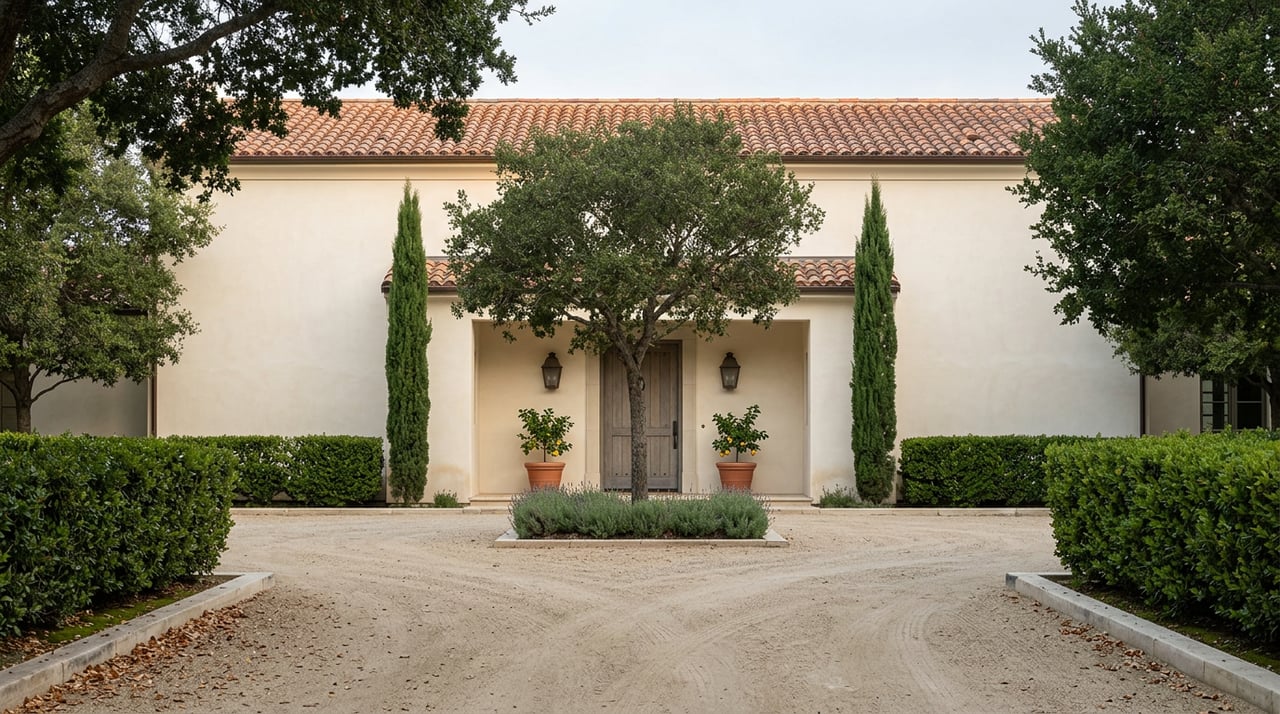
A buyer and seller agree on price. The inspection comes back clean. The buyer's lender is ready. Then, somewhere in the first two weeks of escrow, the buyer calls their insurance broker to bind a policy, and the quote they got before the offer was signed is gone. Not lapsed. Not repriced. Gone, because a house two streets over bound coverage with the same carrier four days earlier, and the carrier had exactly one allocation left for that stretch of hillside.
This is not a rare story anymore in Montecito. It is becoming a routine one, and it is changing how offers get written and how listings get prepared, because the thing that stalls a Montecito closing in 2026 is rarely the appraisal or the title report. It is the insurance.
The Part Everyone Already Knows
Most people who have looked at Montecito real estate already understand the broad outline. Much of the community sits in a high fire-hazard severity zone between the Santa Ynez Mountains and the coast, and standard homeowners carriers have pulled back from writing new policies there over the past several years. When a standard carrier declines or non-renews a property, the fallback is the California FAIR Plan, the state's insurer of last resort, created in 1968 and financially backed by the state's private insurers rather than by any government fund.
The FAIR Plan's growth tells the story on its own. As of early 2026, the plan carried roughly 668,000 active policies statewide, up from about 154,000 in 2019, a more than fourfold increase in six years. That is the version of this story every wildfire-insurance article already tells. It is true, and it is also not the part that actually catches Montecito buyers off guard mid-transaction.
What the FAIR Plan Actually Covers
The FAIR Plan is a named-peril policy. It pays for fire, lightning, and internal explosion, plus smoke if added, up to a combined limit of $3 million across dwelling, other structures, personal property, and loss of use. It does not cover water damage from a burst pipe, theft, liability if a guest is hurt on the property, or almost anything else a standard homeowners policy would include. For a $6 million Montecito estate, that $3 million cap alone is often a mismatch with replacement cost, before the coverage gaps even enter the conversation.
That gap is why a second policy, called a Difference in Conditions or DIC policy, exists. A DIC is sold separately, by a different carrier, with its own effective date and its own deductible. It is not an endorsement on the FAIR Plan. It is a stand-alone contract designed to sit alongside it and restore the liability, water damage, and theft coverage the FAIR Plan leaves out. Most mortgage lenders require this combination before they will fund, because a FAIR Plan policy alone does not satisfy standard loan covenants for comprehensive coverage.
FAIR Plan Plus DIC: Two Policies, Two Clocks
Here is where the state's own numbers reveal something worth sitting with. The California Department of Insurance's fact sheet on residential FAIR Plan policies notes that the gap between the number of FAIR Plan policies and the number of DIC policies in force has not narrowed over time, and separate reporting on that same data puts the ratio at roughly one DIC policy for every two FAIR Plan policies. In plain terms, something close to half of California homeowners relying on the FAIR Plan do not have the wrap policy that would cover a burst pipe or a slip-and-fall claim.
| California FAIR Plan | DIC Wrap Policy | |
|---|---|---|
| Sold by | The Plan itself | A separate admitted or surplus-lines carrier |
| Covers | Fire, lightning, internal explosion, smoke | Water damage, theft, liability, loss of use |
| Coverage limit | Up to $3 million combined | Set independently by the DIC carrier |
| Required by most lenders | Alone, usually not sufficient | Yes, in combination with FAIR Plan |
| Renewal timing | Tied to FAIR Plan cycle | Independent effective date and deductible |
That last row is the one that matters inside an escrow. Two policies with two separate effective dates means two separate points of failure, and neither one is guaranteed to move on the timeline a purchase contract assumes.
The Real Friction Isn't Affordability. It's Capacity.
Cost gets most of the attention in coverage of California's insurance market, and cost is genuinely rising. The FAIR Plan's next statewide rate increase is set to take effect on October 15, 2026, raising premiums by roughly 29.1 percent, with wildfire-exposed properties absorbing a larger share of that increase than lower-risk ones. But price is a number a buyer can plan around. What is harder to plan around is capacity, and capacity in the DIC and surplus-lines market moves in ways a 30-day escrow calendar was never built to accommodate.
Surplus-lines and specialty carriers, the ones most likely to write a DIC wrap for a high-value hillside property, allocate capacity by geography and by underwriting appetite that can shift week to week. A quote issued in July can be unavailable in August, not because the buyer's application changed, but because the carrier filled its allotment for that zip code or that street with someone else's binder. The practical guidance from brokers who work this market is to start shopping DIC coverage as early as 90 days before a policy is needed, not after an offer is accepted. In an escrow that closes in 30 to 45 days, that math does not leave room for a second attempt if the first quote falls through.
There is also a sequencing trap that is specific to this market. A quote is not a hold. Until a policy is both bound and the premium is paid, the underlying capacity behind it can be claimed by another applicant first, sometimes the neighboring property, sometimes another buyer working the same street. Treating an insurance quote the way one treats a loan pre-approval, as something that will still be there in three weeks, is the assumption that most often turns into a delayed close.
Price Band Changes the Problem Too
Montecito's price range is wide enough that the insurance conversation looks different depending on where in that range a property sits. Entry-level condominiums in the community run roughly $1.5 million to $3.5 million as of 2026 and are more likely to qualify for standard or admitted-market coverage. Move up and the tiers get more specific: around $10 million is the entry point for a renovation-ready estate in a gated enclave such as Birnam Wood, while $20 million marks the shift to true ocean-view legacy property, the kind of listing behind the $25.5 million sale on Jelinda Drive in April 2026. At $30 million and up, the properties are multi-acre compounds along streets like Picacho Lane and Sycamore Canyon. At every one of those tiers, the FAIR Plan's $3 million cap is a rounding error against replacement cost, and insuring the home usually means a full excess-and-surplus placement built from scratch rather than the more common FAIR Plan plus DIC combination, which takes longer to underwrite than either piece of that simpler pairing.
The community's broader market data underscores how little room there is to absorb delay. As of May 2026, the median sale price for Montecito homes sat around $5.7 million, with typical listings spending roughly 89 days on market, selling near 96 percent of list price, and about 8 percent closing above asking. That is not a market where either side can afford a stalled escrow while an insurance placement gets sorted out.
If You're Selling
- Ask your current carrier or broker for a current declarations page and confirm what it does and does not cover before the property goes on the market, not after an offer is in hand.
- If your home is on the FAIR Plan without a DIC wrap, expect a buyer's lender to flag that gap. Knowing your own coverage status in advance lets you address it in the listing conversation rather than in a renegotiation during contingency removal.
- If your neighborhood has seen recent binding activity with a particular carrier, mention it. It affects how quickly a buyer's own placement can move.
If You're Buying
- Start the DIC and surplus-lines conversation the day escrow opens, not the week before closing. The 90-day-ahead guidance brokers give for renewals applies just as much to a purchase transaction.
- Confirm in writing that any quote includes both a bind date and a payment date, since neither the FAIR Plan nor most DIC carriers hold capacity on a quote alone.
- Build insurance contingency language into the purchase agreement that reflects real placement timelines for the price band you are buying into, rather than the generic 17-day contingency period that assumes standard-market coverage.
A Few Direct Questions
Does every home in Montecito need the FAIR Plan? No. Many properties, particularly outside the highest fire-hazard zones or at lower price points, still qualify for standard admitted coverage. The FAIR Plan becomes relevant specifically when a standard carrier has declined or non-renewed the property.
Is the one-year non-renewal moratorium still protecting Montecito homeowners? Only in the year immediately following a new gubernatorial wildfire emergency declaration in an affected zip code. Older declarations, including the one tied to the 2017 Thomas Fire, expired their protection windows long ago, which means most Montecito properties today are fully exposed to standard non-renewal rules with 75 days' notice.
Does a DIC wrap cost a fixed amount on top of the FAIR Plan? No. It is priced independently by its own carrier based on the property, the coverage limits selected, and current market capacity, which is part of why the total cost and availability can shift between the time a seller lists and the time a buyer closes.
None of this is insurance advice, and the specifics of any policy should come from a licensed broker who places coverage in this market regularly. What it is meant to do is put insurance timing on the same footing as inspection timing and loan timing when a Montecito purchase gets structured, because right now, it often decides more of the outcome than any of the three.
If you are weighing a purchase or a listing in Montecito and want to talk through how insurance timing fits into your specific plans, Live In Santa Barbara is here. Let's Connect.