The Upper East is the neighborhood I call home, and after more than 33 years in Santa Barbara, I can tell you it is one of the city's best-kept secrets. Not in the sense that people do not know it exists, but in the sense that its full depth of character is something you only understand once you actually live here. The tree-lined streets, the historic homes, the walkability, the proximity to everything that makes Santa Barbara worth living in and none of the trade-offs that come with living closer to the tourist corridors. It is a neighborhood for people who actually want to live in Santa Barbara, not just visit it. If you are ready to explore what is currently available, browse Upper East homes for sale.
The Community
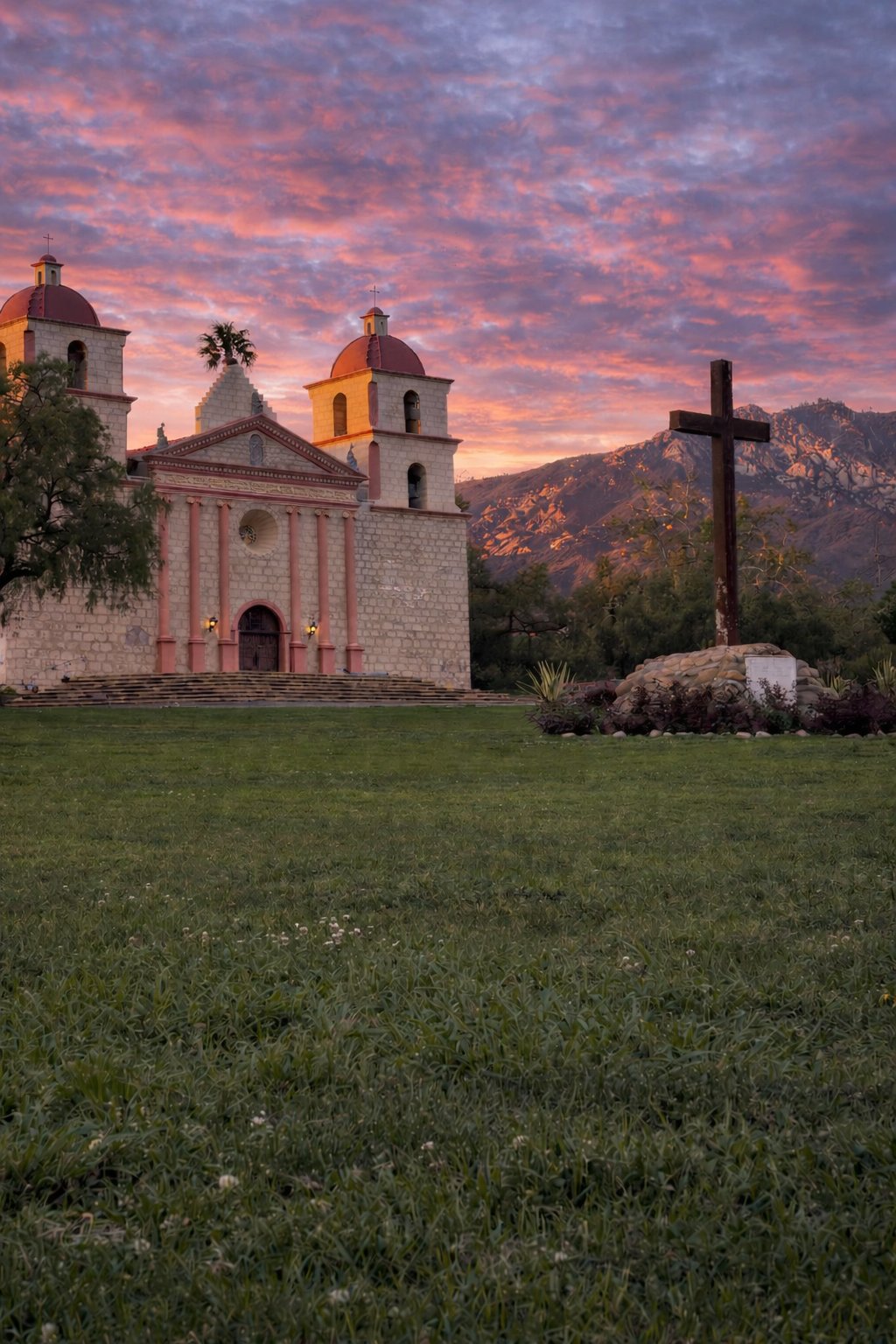
The Upper East sits just northeast of downtown, bounded roughly by Alameda Padre Serra to the north, Laguna Street to the west, and the lower Riviera foothills to the east. It is one of Santa Barbara's most architecturally significant neighborhoods, developed primarily in the early decades of the 20th century and shaped by the same Spanish Colonial Revival movement that gave the city its distinctive Mediterranean identity following the 1925 earthquake.
Walking the Upper East is a genuine architectural education. Spanish Colonial Revival homes with their red tile roofs, arched entries, and courtyard gardens sit alongside Craftsman bungalows, early California vernacular cottages, and the occasional Mission Revival property that predates the earthquake reconstruction entirely. Many of these homes have been in the same families for decades. The neighborhood has a median age of 49 and an average individual income of nearly $100,000, reflecting a community of established residents who value history, character, and the particular quality of life that only a mature, walkable urban neighborhood can offer.
The streets themselves are part of what makes the Upper East special. Garden Street, Islay, Valerio, Alameda Padre Serra, and the blocks surrounding the Rose Garden have a civic grace to them that newer neighborhoods simply cannot manufacture. Mature trees canopy the sidewalks. Hedges and garden walls separate properties without closing them off entirely. People walk here, actually walk, to the Mission, to the Farmers Market, to breakfast on State Street, to the Santa Barbara Bowl. If you are comparing the Upper East to neighboring Samarkand, Riviera, or Hope Ranch, each of those neighborhood guides covers the distinctions in detail.
A Local's Perspective
I moved to the Upper East after downsizing from Hope Ranch, where my family lived on Lago Drive for more than 15 years. When it came time to find our next home, we bought and renovated a 1925 colonial just a few blocks from the Mission, and it has been one of the best decisions I have made.
The two neighborhoods could not be more different in their character, and I love them both for completely different reasons. Hope Ranch gave my family space, and a private beach, and the particular quiet of a gated equestrian community. The Upper East gave us everything that Hope Ranch politely kept at a distance: walkability, neighbors on the sidewalk, restaurants within easy reach, and the feeling of being genuinely embedded in the life of the city.
The timing turned out to be ideal. My two children were in high school when we moved here, and the ability to bike or walk downtown was genuinely transformative for that season of our family's life. They had independence in a way that simply was not possible in Hope Ranch, and the proximity to State Street, the Bowl, friends, and everything a teenager actually wants access to made those years something special. Both are now in college, and I stay in the neighborhood because it suits me just as well in this quieter chapter. The walkability that worked for active teenagers works equally well for someone who simply enjoys being part of a living, breathing neighborhood.
As part of C&H Real Estate Group, the number one team in the Santa Barbara MLS with over $1 billion in sales, I have helped many clients who arrive in Santa Barbara with one neighborhood in mind and leave with another entirely. The Upper East is frequently the neighborhood that changes minds. Buyers who came looking for the Riviera often end up here once they experience the walk score of 75 and the bike score of 60 and realize they can get to State Street without getting in a car. Buyers who came for Montecito sometimes choose the Upper East when they want to be in the city rather than adjacent to it.
I also know firsthand what renovating a historic home in this neighborhood involves. The 1925 colonial we purchased required real work, and navigating the city's historic preservation review process is something I now understand from the inside, not just as an agent. That experience is directly useful to any buyer considering a property that needs updating or expansion. I can help you understand what is realistic, what the process looks like, and how to plan for it before you make an offer.
What I tell every buyer considering the Upper East is this: do not let the price point fool you into thinking this is a compromise. A well-preserved historic home on a good Upper East street is one of the most satisfying places to live in Santa Barbara, full stop. If you are also considering the Riviera, Samarkand, or The Mesa, I am happy to walk you through the differences.
Amenities and Lifestyle
The Upper East's defining amenity is its walkability, and that word deserves more specificity than it usually gets. A walk score of 75 in Santa Barbara means you can reach the Santa Barbara Mission in ten minutes on foot. The Alice Keck Park Memorial Garden, one of the most beautiful urban parks in California, is within easy walking distance. The Santa Barbara Museum of Natural History and the Santa Barbara Botanic Garden are a short walk or bike ride up Mission Canyon Road. Downtown State Street, with its restaurants, the Arlington Theatre, the Granada Theatre, farmers markets, and shops, is a genuine fifteen-minute walk from most Upper East addresses.
The Santa Barbara Bowl, an outdoor amphitheater carved into the hillside above the neighborhood, is practically the Upper East's backyard. Summer and fall evenings with concerts drifting down the hill while you sit on your terrace are one of the quiet pleasures of living here that no brochure quite captures.
Franceschi Park, perched above the neighborhood with panoramic views of the harbor and islands, is one of the most underappreciated viewpoints in Santa Barbara. Rattlesnake Canyon Wilderness Area and the broader trail network of the Santa Ynez Mountain front are accessible within a short drive or an ambitious bike ride.
Schools
Upper East properties generally fall within the Santa Barbara Unified School District. Elementary students typically attend Monroe Elementary or Washington Elementary, both well-regarded schools in the district with strong parent communities and experienced staff. Middle schoolers feed into Santa Barbara Junior High, and high schoolers attend Santa Barbara High School, one of the most storied public high schools on the Central Coast with competitive academics, arts programs, and athletics.
For families considering private education, Marymount of Santa Barbara, a K-8 Catholic school, is located on Alameda Padre Serra, essentially at the neighborhood's edge. The Waldorf School of Santa Barbara and several other independent options are within easy reach. As always, verify specific school assignments for any address directly with the Santa Barbara Unified School District before making a purchase decision.
What Buyers Should Know
The Upper East's historic character is also its primary constraint. Many properties fall within or adjacent to Santa Barbara's historic preservation overlay zones, and significant exterior alterations, additions, or demolitions require review by the city's Historic Landmarks Commission. This is not necessarily a deterrent, but it is something buyers planning renovations need to understand before making an offer. The review process takes time and has real limits on what is permissible. I walk every buyer through the specific planning history and any applicable historic designation for any property we consider seriously.
Lots in the Upper East are generally modest by Santa Barbara prestige neighborhood standards. Privacy comes from mature landscaping, garden walls, and the rhythm of the streets rather than from acreage. Buyers accustomed to Hope Ranch or Montecito lot sizes will notice the difference. For most Upper East buyers, that is not a problem because the trade-off is the walkability and urban character they came here for.
Parking can be limited on some blocks, particularly the denser streets closer to downtown. Properties with garages or off-street parking carry a meaningful practical advantage. It is worth paying attention to during tours.
Wildfire risk in the Upper East is lower than in the upper Riviera or foothill neighborhoods, given its position further from the urban-wildland interface. Insurance availability here is generally more straightforward than in higher-risk zones, though California's market continues to evolve and current carrier options should always be verified as part of due diligence. For buyers who want the historic character of the Upper East with even lower fire risk exposure, Samarkand is worth exploring as a comparable alternative just to the west.
The Market
The Upper East sits within the broader Santa Barbara single-family home market, which closed 2025 with a city-wide median price of $2,302,500, up from $2,122,500 at year-end 2024, with the Upper East identified alongside the Riviera and ocean-view Mesa as neighborhoods with concentrations of higher-end homes that helped fuel that increase. Katinkagoertz
At the neighborhood level, Upper East homes typically trade in the $1.5 million to $4 million range depending on size, condition, historic character, and location within the neighborhood, with exceptional properties and larger parcels reaching above that range. The neighborhood rewards buyers who understand architectural value and can see past cosmetic condition to recognize what a well-located historic home represents as a long-term asset.
Santa Barbara's overall single-family market posted a 7% increase in median price in 2025 to $2.3 million, with both average and median prices reaching 35-year highs, underscoring the long-term strength and desirability of the Santa Barbara lifestyle market. Stan Tabler The Upper East, as one of the city's most established and architecturally significant neighborhoods, has consistently tracked with or above that broader trend.
Since the Los Angeles fires in early 2025, natural hazard exposure has become a more prominent factor in buyer decision-making, with insurance availability and premium volatility increasingly shaping demand in higher fire-risk zones. Homes.com The Upper East's relatively lower fire-risk profile has made it a more attractive option for buyers who want to be in Santa Barbara proper without the insurance complications that come with foothill and wildland-adjacent addresses.
Inventory in the Upper East is characteristically low. Historic homes in desirable neighborhoods with established communities do not turn over frequently, and when they do, well-priced properties in good condition move quickly. Homes that need significant work or are priced above current comps are taking longer, consistent with the broader market dynamic heading into 2026.
Browse current Upper East listings to see what is available now, or explore neighboring Riviera, Samarkand, and The Mesa if you are weighing your options across central Santa Barbara.
If you are thinking about buying or selling in the Upper East, I would genuinely welcome the conversation. This is my neighborhood, and I know it well. Reach me at (805) 455-7661 or at [email protected].